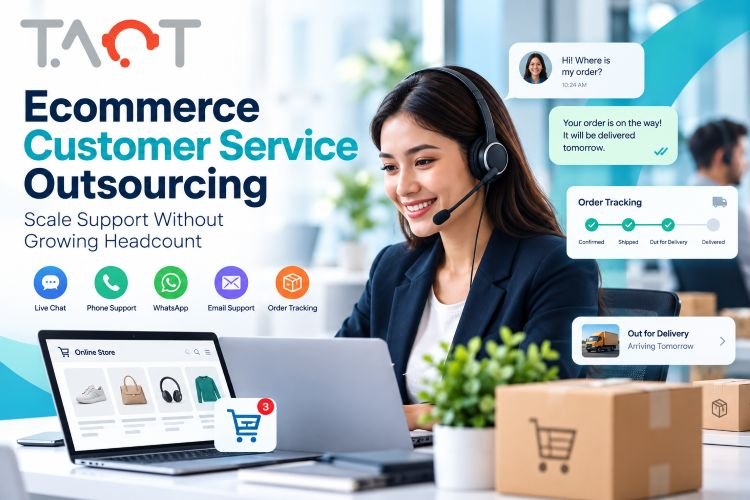
Live Chat Outsourcing for Customer Support Teams

Live Chat Outsourcing

How many potential customers have abandoned your website in the last 30 days because no one answered their chat in time? The average visitor waits less than 60 seconds before closing a chat widget with no response — and for e-commerce and SaaS businesses, that abandoned conversation is almost always an abandoned purchase or trial.

Live chat outsourcing solves this at the root: trained agents cover your chat channel around the clock, response times drop to seconds, and your internal team stays focused on the work only they can do. This guide covers how it actually works, what it costs to do well, and how Central Tact runs 24/7 chat operations for digital businesses today.

What Live Chat Outsourcing Actually Means

Live chat outsourcing means handing your website’s chat channel to an external team of trained agents who respond to customers in real time, on your behalf, in your brand voice, following your product knowledge and escalation rules.

The difference from in-house chat comes down to capacity. An internal team is limited by working hours, headcount, and competing priorities — someone answering chat is usually also handling tickets, calls, or their actual job. An outsourced team’s only job is the chat channel, covering whatever volume your traffic generates, including overnight and weekends, without adding a single person to your payroll.

That team handles the full range of conversations: pre-sales questions, account queries, technical troubleshooting, order status, complaints, and escalation routing. Your internal staff only sees the cases that genuinely need their expertise — everything else gets resolved on first contact. Businesses that need voice and email covered under the same roof can fold all of it into a single managed operation through Central Tact’s customer support outsourcing.

Why Chat Has Become the Channel That Decides Conversions

Live chat consistently posts the highest satisfaction scores of any support channel, and visitors who engage with it convert at several times the rate of those who don’t. The reason is simple: a response measured in seconds creates a completely different experience than one measured in hours.

For SaaS products, this shows up directly in activation. A user who hits a wall in their first session and gets no chat response is a user who doesn’t come back. For e-commerce, a pre-purchase question answered immediately turns a browser into a buyer. An unanswered chat isn’t a neutral, no-harm-done event — it’s revenue leaving through the front door.

The math on response time is just as direct. Every extra minute a customer waits after opening a chat lowers the odds they convert. Sub-30-second first responses produce the strongest results; a three-minute delay, a gap mid-conversation, or a slow handover all introduce friction that costs sales. This is exactly what dedicated outsourced agents are built to remove — their only job is the chat window, not chat plus five other responsibilities competing for attention.

Shared vs. Dedicated Agents: Which One Actually Fits Your Business

One of the first real decisions in live chat outsourcing is whether you need shared agents or a dedicated team — and the right answer depends on your volume and how complex your product is to explain.

Shared agents split their time across several client accounts. They work fine for lower-volume operations with fairly standardized questions, where brand consistency matters but isn’t make-or-break. Quality is acceptable, but agents are dividing their attention and product knowledge across multiple brands, so it rarely goes beyond “acceptable.”

Dedicated agents work only on your account. Over time they build real product depth, develop a consistent brand voice, and reach a quality level shared agents structurally can’t match — because shared agents are always relearning context that a dedicated agent already has memorized.

The practical line: if your chat channel handles more than roughly 300 conversations a month, or your product takes real explaining, dedicated agents will outperform shared ones on every quality metric worth tracking — first contact resolution, CSAT, average handling time. The cost premium is real, but it’s usually smaller than the cost of customers bouncing off a generic answer. Central Tact structures dedicated teams with named agents, fixed shift patterns, and a clear account lead, so you always know who’s handling your chat and how they’re performing.

Running Live Chat Around the Clock, Without Cutting Corners

Most in-house support teams cover chat from nine to six. Everything outside that window — evenings, weekends, the 2am browsing session of someone in a different time zone — gets silence. And silence is expensive. A meaningful share of e-commerce traffic happens outside standard business hours, and SaaS users scattered across time zones run into onboarding problems exactly when your team is asleep. A visitor who finds your pricing page on a Friday night and gets a real answer converts at a different rate than one who fills out a contact form and waits until Monday.

Central Tact treats this as one continuous operation rather than a “daytime tier” and a thinner “after-hours tier.” The agent on your chat at 3am has been through the same onboarding as the one covering your busiest afternoon slot — same product training, same access to your escalation rules, same quality checks. There’s no drop in standard once the sun goes down.

That consistency starts before an agent ever touches a live conversation. New agents go through your documentation, your FAQ library, and your internal knowledge base, then move on to brand voice — making sure responses sound like your company wrote them, not a call center. After that comes escalation training, so agents know precisely which situations need to go to your internal team and who exactly to send them to. Last comes the platform itself, whatever you’re running — Zendesk, Intercom, Freshdesk, or something else.

Once a team is live, we hold them to numbers, not adjectives. First response under 60 seconds. First contact resolution above 80%. Every single interaction reviewed — not a sample, not a monthly spot-check, but full AI-assisted coverage of 100% of conversations, with the data available to you in real time. If a provider can’t show you those numbers on demand, that’s usually a sign there’s nothing solid behind the “we deliver great quality” pitch.

The coverage itself runs on shift patterns built for handoff-free continuity — no gap where one agent logs off before the next one is briefed, no degraded service window. Whether your peak traffic is 9am or 11pm, the team and the standard stay the same.

Turning Chat Into a Sales Channel, Not Just a Support Cost

Most businesses treat chat purely as support. The ones growing fastest treat it as sales.

A visitor browsing your pricing page already has intent. One who opens a chat to ask about plan differences has strong intent. An agent trained to answer that clearly, handle the comparison against competitors, and offer a relevant upsell or trial extension converts that visitor at a noticeably higher rate than an FAQ page or a delayed email ever will.

In practice, that means training agents on the full pre-purchase journey: first-touch qualification, pricing questions, objection handling, upsell identification, and a clean handover to your sales team once a conversation crosses a defined qualification threshold. These agents are measured against conversion KPIs, not just CSAT, because the goal is revenue, not just a closed ticket.

For e-commerce, this shows up as recovered abandoned carts and higher order values. For SaaS, it shows up as better trial-to-paid conversion and faster decisions from inbound leads. Businesses that want to extend this beyond inbound chat into proactive outreach often pair it with a B2B outbound sales team.

Working Inside the Tools You Already Use

A common concern when businesses consider outsourcing chat: do they have to abandon their existing setup? They don’t.

Central Tact agents work directly inside your existing platform — Zendesk, Intercom, Freshdesk, LiveChat, Tidio, HubSpot, or whatever you’ve already built around. That means your ticket structure, your tags, your macros, and your escalation paths stay exactly as they are. Agents follow your conventions from day one rather than working in a parallel system that needs translating back into yours later.

The practical upside is that nothing about your reporting changes. Historical data stays in one place, your team can monitor chat in real time using tools they already know, and there’s no migration risk or retraining on a new interface. If you’re running a platform outside this list, it’s worth confirming compatibility before onboarding — but for most established tools, integration is straightforward.

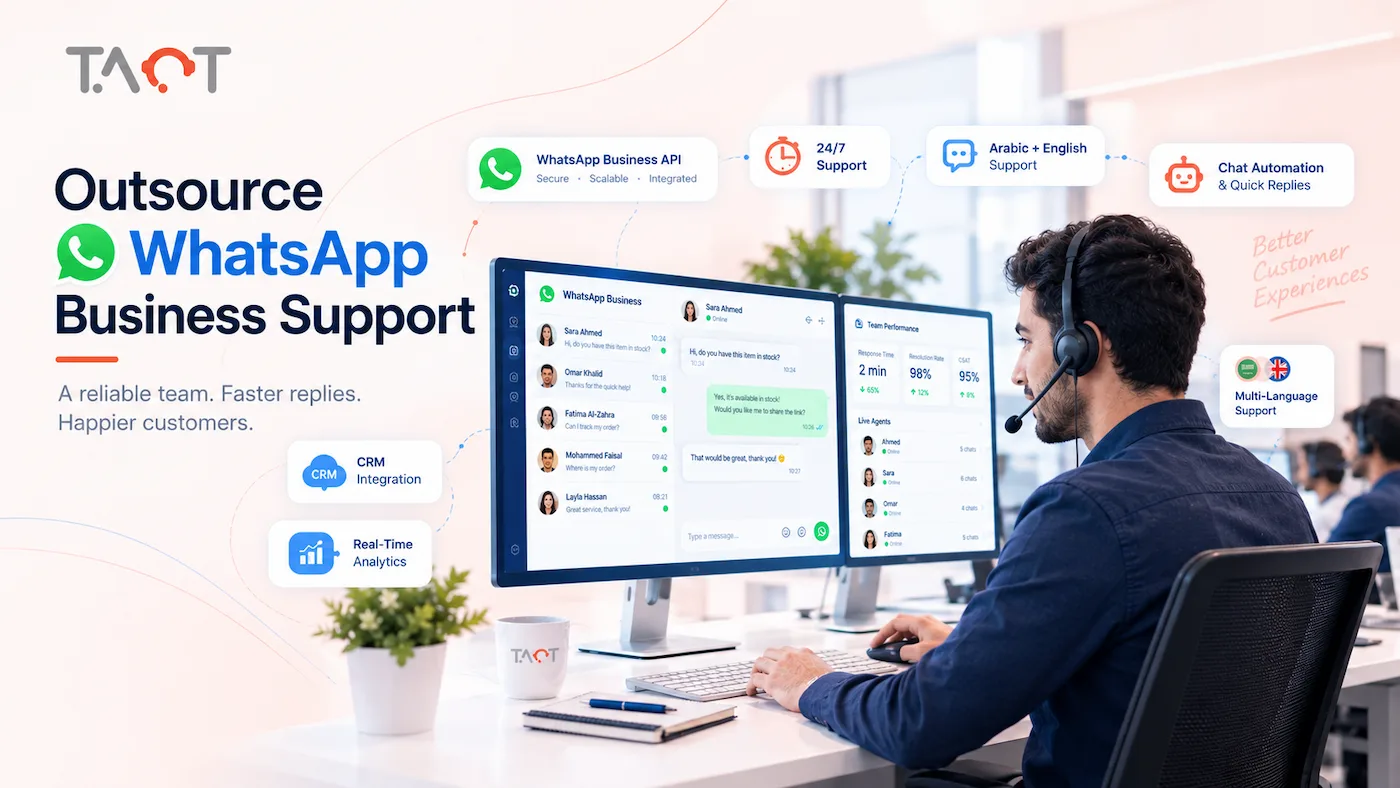
Beyond chat, Central Tact also covers phone, email, WhatsApp, and social media support, so businesses that want everything under one managed operation with one quality standard can do that without juggling separate vendors.

Where AI Fits, and Where It Doesn’t

AI chatbots are genuinely useful for high-volume, predictable questions — order status, password resets, store hours — and they’re available instantly, around the clock. Agent-assist tools layered on top of human agents speed up response by surfacing suggested answers and account context. Used this way, AI makes a good team faster.

What AI can’t do is handle a frustrated customer, a sensitive account issue, or a high-value sales conversation that needs judgment and tone-reading. A chat strategy built entirely on automation looks efficient on a dashboard and falls apart in practice. Central Tact uses AI for monitoring and triage, but every conversation that needs a human gets one — automation accelerates the team, it doesn’t replace the parts of the job that require a person.

Who This Is For, and When to Move

Live chat outsourcing makes sense for e-commerce businesses losing pre-purchase sales to slow chat responses, SaaS products where onboarding friction shows up in the chat window, and any digital business where response time visibly affects conversion or retention.

The moment to act is when your team can’t consistently hit sub-60-second first responses, or when your chat channel goes effectively unmanaged outside business hours. Those gaps cost measurable revenue every day they sit unresolved.

FAQ

What is live chat outsourcing?

Handing your website’s chat channel to an external team of trained agents who respond in real time, in your brand voice, using your escalation rules — typically with 24/7 coverage.

What’s the difference between shared and dedicated agents?

Shared agents split time across multiple clients and suit lower, more standardized volume. Dedicated agents work only on your account, building deeper product knowledge and more consistent brand voice — usually the better fit once you’re past roughly 300 chats a month or your product needs real explaining.

Can outsourced agents handle sales conversations, not just support?

Yes. Agents can be trained specifically for pre-purchase qualification, objection handling, and upsell identification, measured against conversion KPIs rather than just resolution metrics.

Will outsourcing chat mean changing our existing tools?

No. Agents work inside your current platform — Zendesk, Intercom, Freshdesk, and others — following your existing tags, macros, and escalation paths.

How is quality actually monitored?

Through full AI-assisted review of 100% of conversations, not a sampled percentage, with performance data available to you in real time rather than in a retrospective monthly report.


Talk to Central Tact to discuss your chat volume, your tools, and what always-on coverage could do for your conversion rate this quarter.

Related Services

Share Article

Discover the future of chat services. Download the Chattera app and chat with ease.

Leave a Reply

Your email address will not be published. Required fields are marked *

Realted Article
Travel Call Centers Outsourcing
Travel Call Centers Outsourcing Guide 2026

One Disruption Can Cost You a Customer Forever Eight out of ten business travelers experienced disruptions in 2024 — cancelled flights, missed connections, hotel booking